
Field note
Wood burning vs multi fuel stove: which is right for your home?
The honest difference between a wood burning and a multi fuel stove, and how to pick the right one for your room, your chimney and how you actually plan to use it.
10 July 2026
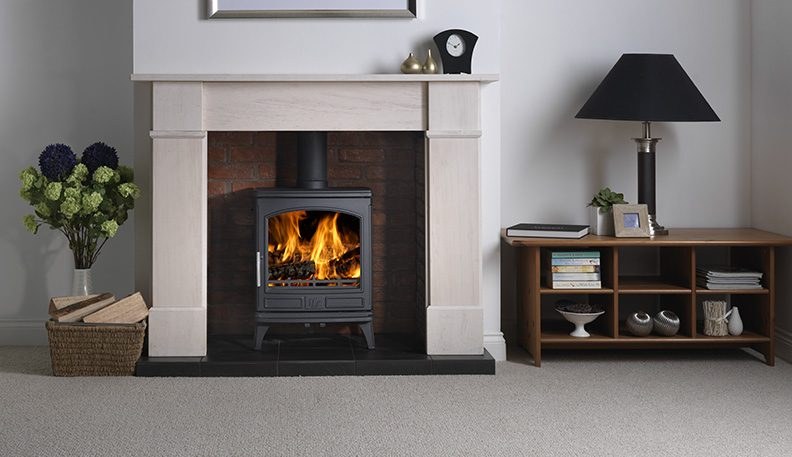
If you are choosing a stove for a Yorkshire home, the first decision is usually wood burning vs multi fuel stove. They look almost identical in the showroom, and plenty of models come in both versions, so it is easy to assume the choice does not matter much. It does, and the right answer depends less on the stove and more on how you plan to use it.
Here is the short version. A wood burning stove is built to burn logs and only logs, on a flat bed of ash with the air coming from above. A multi fuel stove adds a raised grate and a riddling system so it can also burn approved smokeless solid fuels. If you want the option of burning anything other than seasoned wood, you need multi fuel. If you are certain you will only ever burn logs, a dedicated wood burner will often burn them a little better.
Wood burning vs multi fuel stove: the difference is the grate
On a wood burning stove, logs sit on a bed of ash and draw their air from above. Wood actually burns best this way, because the ash bed insulates the fire and the air washes down over the flames. That is why a pure wood burner tends to give a clean, steady burn with good glass.
A multi fuel stove has a raised grate with a riddling mechanism, so ash falls through into a pan below and air can be drawn from underneath. Smokeless fuels need that airflow from below to burn properly. The trade off is that when you burn logs on a multi fuel grate, you lose the insulating ash bed, so many people simply leave a layer of ash on the grate and burn wood on top.
Which fuel do you actually want to burn?
This is the question that settles it for most people.
- Logs only: choose a wood burning stove. In much of our area, from Leeds out to the coast, well seasoned or kiln dried logs are easy to get, so a dedicated wood burner makes sense and burns them at their best.
- Smokeless fuel, or a mix: choose a multi fuel stove. Approved smokeless briquettes hold heat for longer and are useful for a long, low overnight burn, which some homeowners prefer.
One important point for our region: much of Yorkshire falls under Smoke Control rules, so whatever you choose it should be a DEFRA exempt (also called Smoke Control exempt) stove, and you should only ever burn dry wood with a moisture content under 20 percent or approved smokeless fuels. We confirm the right specification on the survey.
Does one cost more than the other?
The stoves themselves are usually priced the same or within a few pounds of each other, so cost rarely decides it. What moves the price of the whole job is the installation: whether your chimney needs lining or a twin wall flue, the hearth and chamber work, and the stove you settle on. We cover what drives the total in our guide to what a stove installation costs.
Our honest recommendation
If you are happy sourcing good dry logs and you like the ritual of a wood fire, a wood burning stove is hard to beat and will reward you with a cleaner burn. If you want flexibility, or you like the idea of a longer overnight burn on smokeless fuel, go multi fuel and you keep every option open.
The best way to decide is to see the stoves in the room they are going into. We bring that experience to the free home survey, talk through how you plan to use the fire, and make sure whatever you choose is the right size and specification for your chimney and your space. Every stove is then fitted by Carl himself, HETAS registered and signed off, so it is safe and legal from the first light.
Not sure which way to lean? Have a look at our wood burning and multi fuel stoves, then book a survey and we will give you a straight recommendation with no sales pressure.
Thinking about a stove or fireplace?
Book a free home survey and we will give you honest advice and one clear written quote, with no obligation.
Request a free home survey