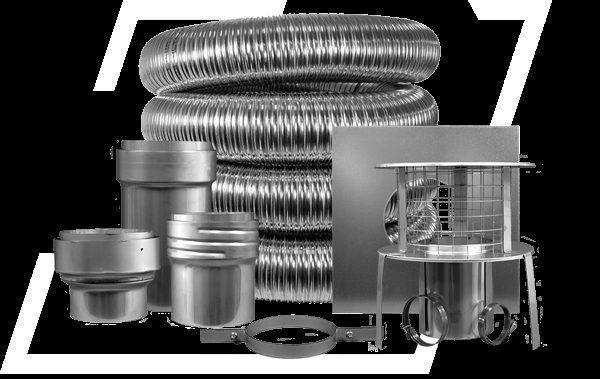
Flexible stainless steel chimney liner and flue components for a stove installation in a period home

York chimney liners

Chimney liner installation in York

York chimney liner work is often about making an old flue suitable for a modern stove without losing sight of the building it belongs to.

Carl Finnell fits chimney liners and twin-wall flue systems for stove installations across York and the surrounding villages. This page focuses on the flue: when an old chimney needs lining, how 316 and 904 liner grades are chosen, what relining involves, and when a chimney-free home needs a twin-wall system instead.

York has a lot of flue variety. Georgian and Victorian townhouses, terraces inside the walls, suburban homes in Clifton and Fulford, and village properties around Poppleton and Dunnington all ask different questions. The liner has to match the appliance, the chimney condition and the way the stove will be used.

Process

How we specify a York chimney liner

A liner should be specified after inspection. The age of the chimney, route, diameter, access and use pattern all matter.

01

Inspect the chimney and access

The survey checks the fireplace opening, chimney height, route, pot, access, signs of tar or damp, previous appliance history and whether the flue has been altered. Old York brick chimneys can look serviceable while still being unsuitable unlined.

02

Choose the liner size and grade

The liner diameter follows the stove and manufacturer requirements. A 316 stainless liner is the common choice for many wood-burning installations, while 904 may be worth discussing where use is heavier, the chimney is more exposed or smokeless fuel may be part of the pattern.

03

Fit the liner and terminal

The liner is installed through the chimney, connected to the vitreous pipe, secured and finished at the top with the correct cowl or terminal. In York, the visible terminal choice can matter as much as the technical fit on sensitive rooflines.

04

Test and certify the system

Once connected, the system is smoke-tested and commissioned. Where the liner is part of a HETAS stove installation, the notification and certificate are handled with the completed job.

York specifics

Lining York chimneys properly

Many York chimneys were built for open fires, not modern closed appliances. They can be too wide, rough internally, cold, leaky or affected by old parging. A liner gives the stove a consistent flue size, keeps flue gases warmer and makes sweeping more predictable.

Townhouses around Bootham, Clifton, Fulford and Bishophill can have tall stacks and older brickwork. Height can help draw, but it can also reveal problems with cold flues, downdraught, terminal exposure or failed internal surfaces. The survey decides whether the answer is a standard liner, a different cowl or a more resilient specification.

Listed and conservation-area properties need careful visible decisions. The liner itself sits inside the chimney, but the pot, cowl, terminal or any twin-wall alternative can affect appearance. If a building is listed, relevant work needs the right consent. We flag those points clearly rather than treating the roofline as an afterthought.

For Nether Poppleton, Haxby, Dunnington, Bishopthorpe, Copmanthorpe and Strensall, the flue question is often tied to how hard the stove will work. A daily winter stove in a larger or older home may justify a higher-grade liner discussion, while an occasional-use room may not need the same spend.

Cost guidance

What affects chimney liner cost in York

The cost depends on chimney height, roof access, liner diameter, liner grade, cowl or terminal, fireplace connection and whether the chimney needs extra preparation. A straightforward liner through a clear two-storey chimney is not the same as a tall townhouse stack or a sensitive roofline.

The quote should include the liner, connectors, closure or register plate, cowl, labour, smoke testing and certification where the liner is part of the stove installation. If the right answer is twin-wall because there is no usable chimney, the route and components should be shown clearly before work starts.

Best fit

Common York flue choices

316 stainless liner

A practical fit for many wood-burning stove installations where use is normal and the chimney is suitable.

Read more

904 stainless liner

Worth considering for harder use, exposed stacks or mixed-fuel patterns where long-term resilience matters.

Read more

Twin-wall flue systems

For rooms without a usable chimney, subject to a safe route and a visual finish that works for the building.

Read more

Proof nearby

A real York-area installation

Case study

ACR Rowandale stove, Nether Poppleton

The Nether Poppleton case study is a useful York-area example because the stove, hearth, beam and flue decisions were all part of one finished installation.

Read the case study →

Useful next pages

Plan the rest of the York job

HETAS registered

Installed with care, certified with confidence

Carl self-certifies every installation and notifies Building Control on your behalf, so the work is signed off properly and your certificate of compliance is issued for your records.

Verify Carl's HETAS registration

York questions

York chimney liner FAQs

Why do so many York chimneys need lining?

Many were built for open fires and are too large, rough or leaky for a modern stove. A liner creates a consistent, sweepable flue sized to the appliance.

Is 316 or 904 liner better for a York stove?

316 is suitable for many wood-burning installations. 904 costs more but can be better for heavier use, exposed chimneys or mixed fuel patterns, so we recommend it only where the survey justifies it.

Can a liner be fitted without changing the look of the fireplace?

Often, yes. The liner sits inside the chimney, but the stove connection, closure plate and terminal still need careful detailing so the room and roofline look right.

What if my York home has no working chimney?

A twin-wall insulated flue may be possible if there is a safe route through the building or externally. In sensitive locations, the visual route needs particular care.

Does a chimney liner deal with York smoke-control rules?

No. A liner helps the appliance draw and burn correctly, but smoke-control compliance depends on using authorised fuel or an exempt appliance where required. We check both points on the survey.

Book your free home survey

Tell us where you are and what you are thinking

Send a few details and we will call to arrange a visit, bring samples and give you a proper quote. No pressure and no obligation.

HETAS-registered installs. We cover Leeds, Harrogate, Wetherby, York, Ripon, Malton, Thirsk and Scarborough.

Not ready for a survey? Ask us to call you back first →