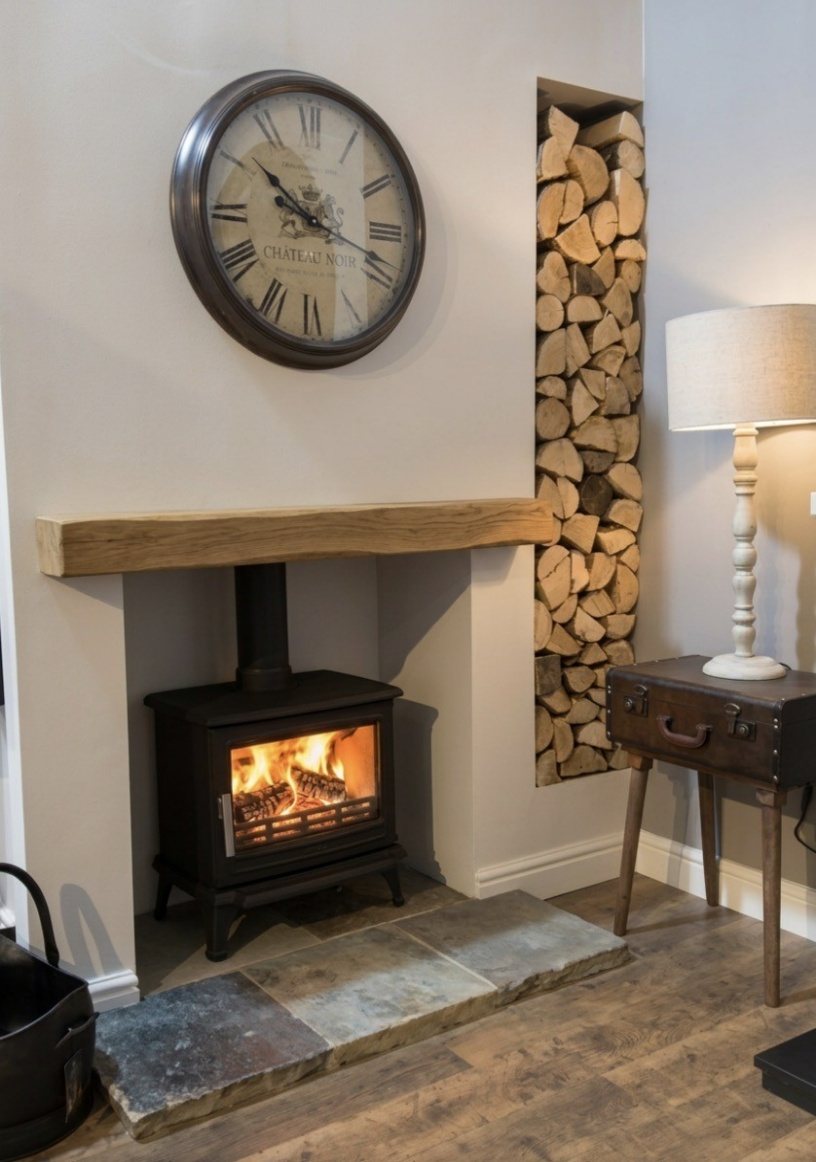
Bootham, Clifton, Fulford and Bishophill contain many period homes where the stove is only one part of the job. The fireplace opening, hearth, chimney breast and liner all need to be judged together. If the room has high ceilings or solid walls, the stove has to be sized for the actual volume and use pattern, not chosen by catalogue looks alone.
Terraces inside and outside the walls often have chimneys that were built for open fires. They can be large, rough internally, altered over decades or patched around older appliances. A modern stove usually performs better with a correctly sized liner because the flue stays warmer, the draw is steadier and future sweeping is more straightforward.
Conservation and listed-building sensitivity is a real York issue. Internal stove work can often be planned without drama, but listed buildings need the right consents for relevant alterations, and any visible external flue route or terminal change should be considered carefully. We do not make planning promises; we flag the points that need checking before the job is agreed.
In Nether Poppleton, Haxby, Dunnington, Bishopthorpe, Copmanthorpe and Strensall, the brief often shifts toward village houses, renovations and larger rooms where a stove can be a daily winter appliance. The Nether Poppleton Rowandale case study is useful because the stove, York stone hearth, oak beam and fireplace finish were treated as one installation, not separate purchases.