
Field note
Can you fit a wood burning stove in a small room?
Yes, small rooms take stoves well, with the right output and the right clearances. Here is how we size and fit a stove so you are warm, not roasted.
1 September 2026
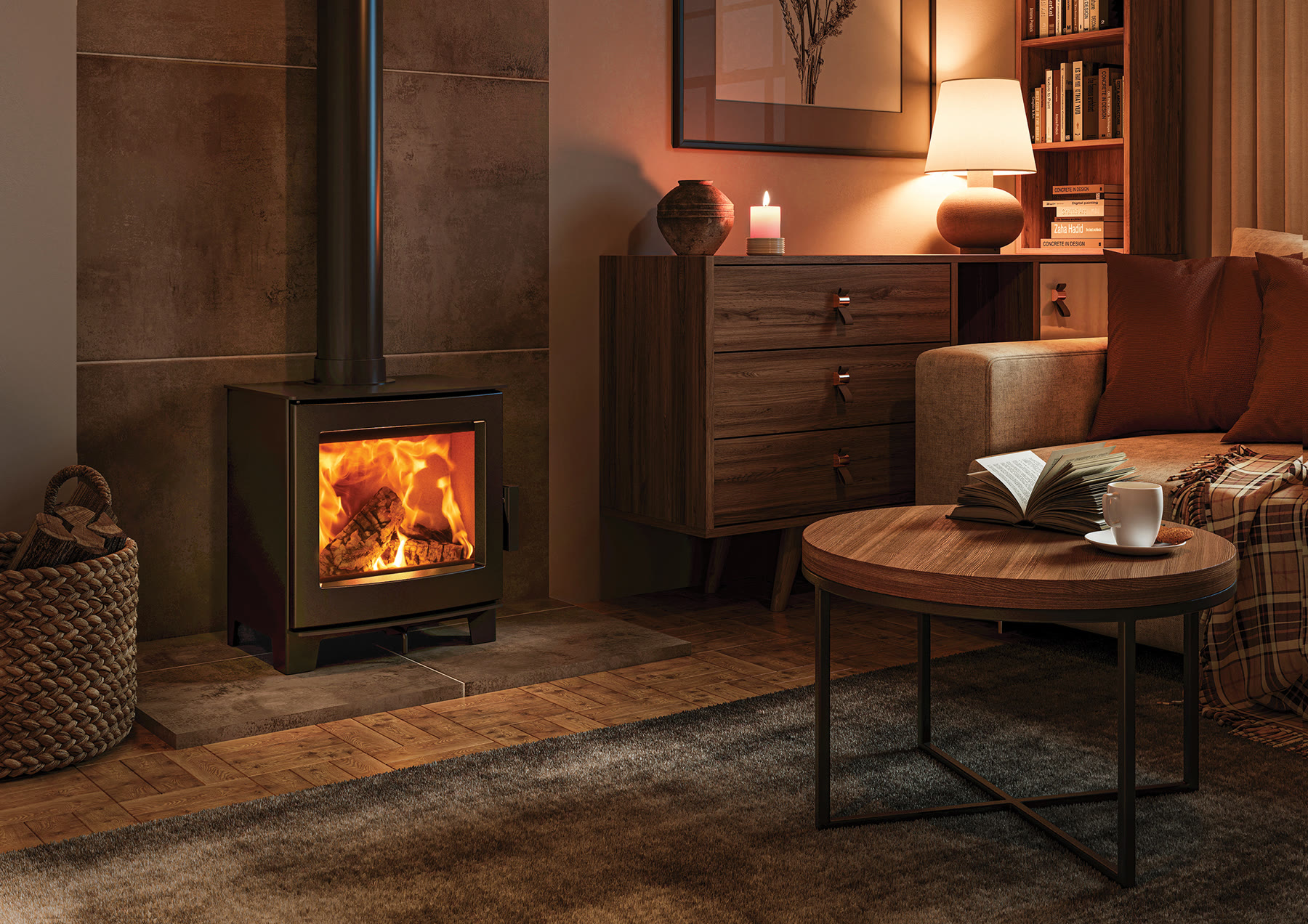
Here is the short version. Yes, a wood burning stove for a small room works well, as long as the output is small enough that you are warm rather than roasted. A rough guide is around 1kW for every 14 cubic metres of space, plus the right clearances and hearth.
The mistake in small rooms is going too big. Here is how Carl and the team get it right.
Can a small room really take a stove?
The direct answer is yes. Small rooms are some of the cosiest spaces for a wood burning stove, because they hold heat well and do not need much output to feel warm.
The trick is matching the stove to the space. A small snug or a terraced front room in Leeds does not need a big, powerful stove. In fact a big one is a problem, because you cannot run it properly without cooking yourself out of the room. The goal is a smaller output stove, run hot and clean, giving you steady comfortable heat.
Plenty of the homes we work in along the corridor, from Leeds terraces to cottages around Knaresborough, have compact rooms. They take stoves beautifully once the sizing is right.
What size stove does a small room need?
Here is the honest guide. A common rule of thumb is roughly 1kW of output for every 14 cubic metres of room. Measure the length, width and height, multiply them together, and divide by 14.
So a modest room works out at a low output, often a good deal smaller than people assume. That points you towards a compact stove rather than the sort of thing you see heating a big open-plan space.
This is a starting point, not the final word. Insulation, the age of the property, how much glazing you have and whether the room is open to a hallway all shift the number. That is exactly what we check on the survey, so you end up with an output that suits the actual room. Our guide on what size wood burning stove to choose walks through the same maths in more detail.
Why does going too big cause problems?
The direct answer: an oversized stove in a small room gets damped down to a slow smoulder, which is inefficient, sooty and unpleasant.
If the stove throws out far more heat than the room needs, you have two choices. Open the windows, which is daft, or starve the fire of air so it ticks over low. That low, smoky burn wastes wood, blackens the glass and lays down tar in the flue. It also never gives you the bright, clean fire people picture when they buy a stove.
A right-sized smaller stove can be run properly, hot and lively, which is cleaner, kinder to the glass and more efficient. In a small room, less really is more. Our guide on how to choose a wood burning stove covers this alongside the other decisions worth getting right.
What about clearances and the hearth?
Every stove needs safe distances to anything that could catch, and a hearth underneath it. In a small room this matters more, because space is tight and it shapes where the stove can go.
A few of the things we check on the survey:
- Clearance to combustibles. The stove needs a set distance from anything that can burn, such as timber, plaster on a stud wall, or furniture. The exact figure comes from the stove’s own instructions, and a heat shield or the right chamber build can reduce it.
- The hearth. The stove sits on a non-combustible hearth of the correct size and thickness, sized to catch stray embers and spread the load.
- The chamber and surround. How we build the recess and finish it affects both the look and the clearances. You can see the range of options for the space around the stove on our stove chambers work.
In a compact room these rules are not there to spoil the plan. They are what makes the stove safe to live with, and a good survey finds the layout that works within them rather than fighting them.
Does DEFRA-exempt matter more in a small room?
Yes, and in built-up areas especially. We recommend a DEFRA-exempt (Smoke Control exempt) stove as standard, and it earns its place in smaller, urban rooms.
A DEFRA-exempt stove is designed to burn more cleanly, which is better for a compact space and better for your neighbours in a tight terrace. Burn dry wood under 20 percent moisture, or an approved smokeless fuel, and you get a clean, efficient fire with far less smoke.
Smoke control rules also vary by address. Parts of York are in a smoke control area today, and the city moves to city-wide smoke control from November 2026. Other towns along the corridor differ, so we check your exact address against the current smoke control rules on the survey rather than assume. Our guide to DEFRA-exempt stoves and smoke control areas explains what that means for you.
How does the survey size it all up?
The direct answer: we measure the room, check the flue or chimney, work through the clearances and the hearth, and recommend a right-sized, DEFRA-exempt stove that fits the space and the rules.
On the free home survey we look at the whole picture. The room dimensions and insulation, where the stove can safely sit, what the chimney or flue needs, and how you want the finished space to look. Then the installation itself is carried out by Carl Finnell as a HETAS-registered installer, which means we self-certify the work, notify Building Control on your behalf, and a certificate of compliance follows. You get one clear written quote after the visit, with no surprises.
FAQ
Is there a minimum room size for a stove?
Not really a fixed minimum, but very small rooms need a very low output stove and careful clearances. That is what the survey is for.
What is the smallest output stove available?
Compact stoves come in low outputs suited to small rooms. Rather than name a figure, we size it to your room on the survey so it is neither weak nor overpowering.
Can I put a stove in an alcove or a small chimney breast?
Often yes. The existing chimney breast is a natural home for a stove, and we build the chamber to suit the space and the clearances.
Do small rooms need extra ventilation?
It depends on the stove’s air needs and how airtight the room is. We check whether an air vent is required as part of the survey.
Will a small stove still look like a proper fire?
Yes. A well-sized stove run hot gives you a bright, lively fire. An oversized one damped down actually looks duller, because it is starved of air.
Can you fit a stove if my small room has no chimney?
Often yes, using a twin-wall flue system. It is a common solution and we will confirm what your room can take on the survey.
Book a free home survey
A small room is no barrier to a proper stove. It just needs the right output, the right clearances and an installer who sizes it for the space you actually have. Carl and the team cover Leeds out to Scarborough, taking in Wetherby, Harrogate and Knaresborough along the way. Book your free home survey and we will measure up, talk it through, and give you one clear written quote.
Thinking about a stove or fireplace?
Book a free home survey and we will give you honest advice and one clear written quote, with no obligation.
Request a free home surveyMore field notes
Read next
Why does my wood burning stove glass go black?
Black stove glass usually comes down to wet wood, burning too low, or shut air controls. Here is why it happens and how to keep the glass clear.
Read the noteSeasoned vs kiln dried firewood: which should you burn?
Both can be fine if the wood is genuinely dry, under 20 percent moisture. Kiln dried is reliably ready now, seasoned is cheaper if stored well. Wet wood is the real enemy.
Read the noteChimney Fire Safety Week 2026: seven checks before winter
Chimney Fire Safety Week runs from 7 to 13 September 2026. Use these seven practical checks to prepare your stove and chimney for safer winter use.
Read the note