
Field note
How much wood will I actually burn in a winter?
An honest look at how much wood a stove really gets through over a Yorkshire winter, and the small choices that make a load of logs last.
18 August 2026
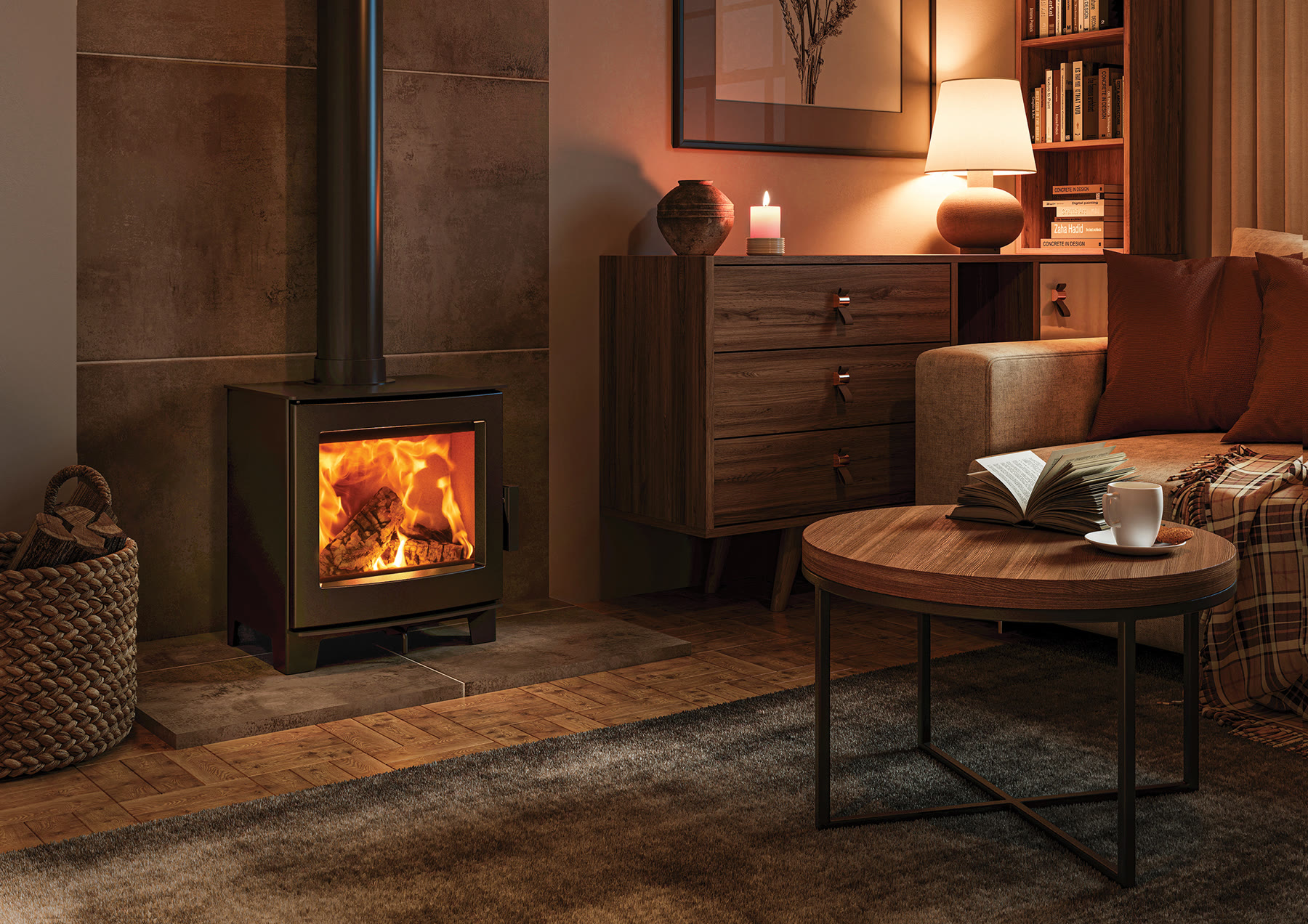
Here is the short version. There is no single figure for how much wood does a wood burning stove use, because it depends on how you burn. An evening-only fire gets through a fraction of what an all-day stove burns. Dry logs, a right-sized stove and a clean flue stretch every load further.
Below is how Carl and the team think it through, and the honest steers we give on the survey.
What actually decides how much wood you burn?
The direct answer: how you use the stove, the size of the room, the output of the stove and the dryness of your logs. Those four things do most of the work.
Someone who lights the wood burning stove for a few hours on a cold evening will burn far less than a household that keeps it going from morning to night through January. A big open-plan room with a lot of glass loses heat and asks more of the fire. A small snug holds warmth and needs less.
The stove itself matters too. A modern, well-controlled stove burns slower and steadier than an old one that races through logs. And a stove that is oversized for the room ends up ticking over on a low, smoky burn, which wastes wood and dirties the glass. More on sizing further down.
None of this is guesswork on the day. When we survey your home, we look at the room, the way you plan to use it and the fuel you can get locally, and we give you a straight answer rather than a brochure number.
Why dry wood is the single biggest thing
Here is the honest steer. Dry wood is the difference between a stove that heats your room and one that mostly heats your chimney.
Wood should be burned at under 20 percent moisture. Wet or green logs spend the first part of the burn boiling off water instead of giving out heat. You feel less warmth, you reload more often, and the unburnt tars coat your glass and line your flue. So you burn more wood to get the same room temperature, and you build up more soot doing it.
Properly seasoned or kiln-dried logs light easily, burn hot and clean, and go a lot further. If you are ordering logs around York, Thirsk or the villages along the corridor, ask the supplier for the moisture content, or buy a cheap moisture meter and check a freshly split face yourself. It is the least glamorous tip we give and the one that saves the most wood.
We always recommend a DEFRA-exempt (Smoke Control exempt) stove and dry wood under 20 percent moisture, or an approved smokeless fuel. That combination is cleaner to burn and, in many areas, it is what the rules ask for anyway. There is more on that in our guide to DEFRA-exempt stoves and smoke control areas.
Does the size of the stove change how much I burn?
Yes, and not in the way people expect. A bigger stove is not automatically a hungrier one, but a wrongly sized stove almost always wastes wood.
If a stove is too powerful for the room, you cannot run it flat out or you will roast. So you damp it down to a slow smoulder. That low, starved burn is inefficient, sooty and hard on the glass, and it gets through wood without giving you clean, useful heat. A stove matched to the room can be run properly, hot and bright, which burns less wood for more warmth.
This is why sizing is the first thing we get right. Our guide on what size wood burning stove you need walks through the thinking, and on the free survey we measure the room and recommend an output that suits how you actually live, not the biggest thing on the shelf.
How much should I buy, and how do I store it?
The direct answer: buy dry, buy ahead, and store it so it stays dry. That is most of the battle.
Firewood is usually sold by volume, by the load or the cubic metre, or bagged as kiln-dried. If you are seasoning your own, it needs time, air and cover. A few pointers we give households across the York area and out towards the coast:
- Stack logs off the ground, on a pallet or bearers, so they are not drawing damp up from below.
- Keep the top covered but leave the sides open so air can move through. Wood needs airflow to dry, not a sealed wrap that traps moisture.
- Split logs season faster than whole rounds, and smaller splits light more easily.
- Bring the next day or two of logs indoors so they are warm and bone dry when they hit the fire.
Buying ahead of winter, ideally in spring or summer, means your logs have time to come down to a good moisture level before the cold sets in. Panic-buying wet logs in December is how people end up burning far more than they need.
Will a stove save me money on heating?
Honest answer: it can help, but it depends on your fuel cost and how you run it. A stove is very good at heating the room you are sitting in, which lets some households ease off the central heating in the evenings.
The running cost comes down to what you pay for logs and how efficiently you burn them. Dry wood in a right-sized, DEFRA-exempt stove gives you the most heat per log. Wet wood in an oversized stove gives you the least. We are not going to promise a figure we cannot stand behind, but the pattern is consistent: the cleaner and better-matched the setup, the less wood you burn for the same warmth.
Does servicing change how much wood I burn?
Yes. A clean flue and a well-maintained stove burn more efficiently, which means less wood for the same heat, and a safer fire.
Soot and tar narrow the flue and slow the draw, so the stove struggles to burn cleanly. A yearly sweep and service keeps it drawing properly and burning hot. It is also good practice for safety, and insurers may ask for proof of regular sweeping, so it is worth keeping the paperwork. You can read more or book on our servicing and sweeping page. Late summer and early autumn are the quiet window, before everyone lights up for winter.
FAQ
How many logs does a stove use in an evening?
It varies with the stove, the room and how hot you run it, so we would rather size it for you than quote a number. A right-sized stove burning dry logs will use fewer than an oversized one damped down low.
What moisture level should firewood be?
Under 20 percent. Above that, you lose heat to boiling off water and you build up more soot and tar in the flue.
Is kiln-dried wood worth it?
It is reliably dry and ready to burn, which makes it a safe choice if you cannot season your own. Well-seasoned logs at under 20 percent moisture do the same job.
Can I burn any wood I have lying around?
Only dry, untreated wood. Never painted, treated or reclaimed timber, and never damp offcuts. They burn dirty and can damage the flue.
Does a multi-fuel stove change how much wood I burn?
A multi-fuel stove lets you burn approved smokeless fuel as well as logs, which some people mix through the winter. It does not change the basic rule that dry fuel and the right size burn most efficiently.
Do I still need my logs covered in a dry spell?
Yes. Keep the top covered year-round so a sudden downpour does not undo your seasoning, but leave the sides open for airflow.
Book a free home survey
The honest answer to how much wood you will burn starts with your room, not a brochure. Carl and the team cover Leeds through to Scarborough, taking in York, Thirsk, Malton and the towns between. We will measure up, talk through how you plan to use the stove, and recommend a right-sized, DEFRA-exempt option with one clear written quote after the visit. Book your free home survey and we will take it from there.
Thinking about a stove or fireplace?
Book a free home survey and we will give you honest advice and one clear written quote, with no obligation.
Request a free home surveyMore field notes
Read next
Why does my wood burning stove glass go black?
Black stove glass usually comes down to wet wood, burning too low, or shut air controls. Here is why it happens and how to keep the glass clear.
Read the noteSeasoned vs kiln dried firewood: which should you burn?
Both can be fine if the wood is genuinely dry, under 20 percent moisture. Kiln dried is reliably ready now, seasoned is cheaper if stored well. Wet wood is the real enemy.
Read the noteChimney Fire Safety Week 2026: seven checks before winter
Chimney Fire Safety Week runs from 7 to 13 September 2026. Use these seven practical checks to prepare your stove and chimney for safer winter use.
Read the note