Field note
Wood burning stove vs open fire: what's the real difference?
A wood burning stove gives you far more usable heat than an open fire, with less smoke and mess. Here is the honest difference, and what converting involves.
25 August 2026
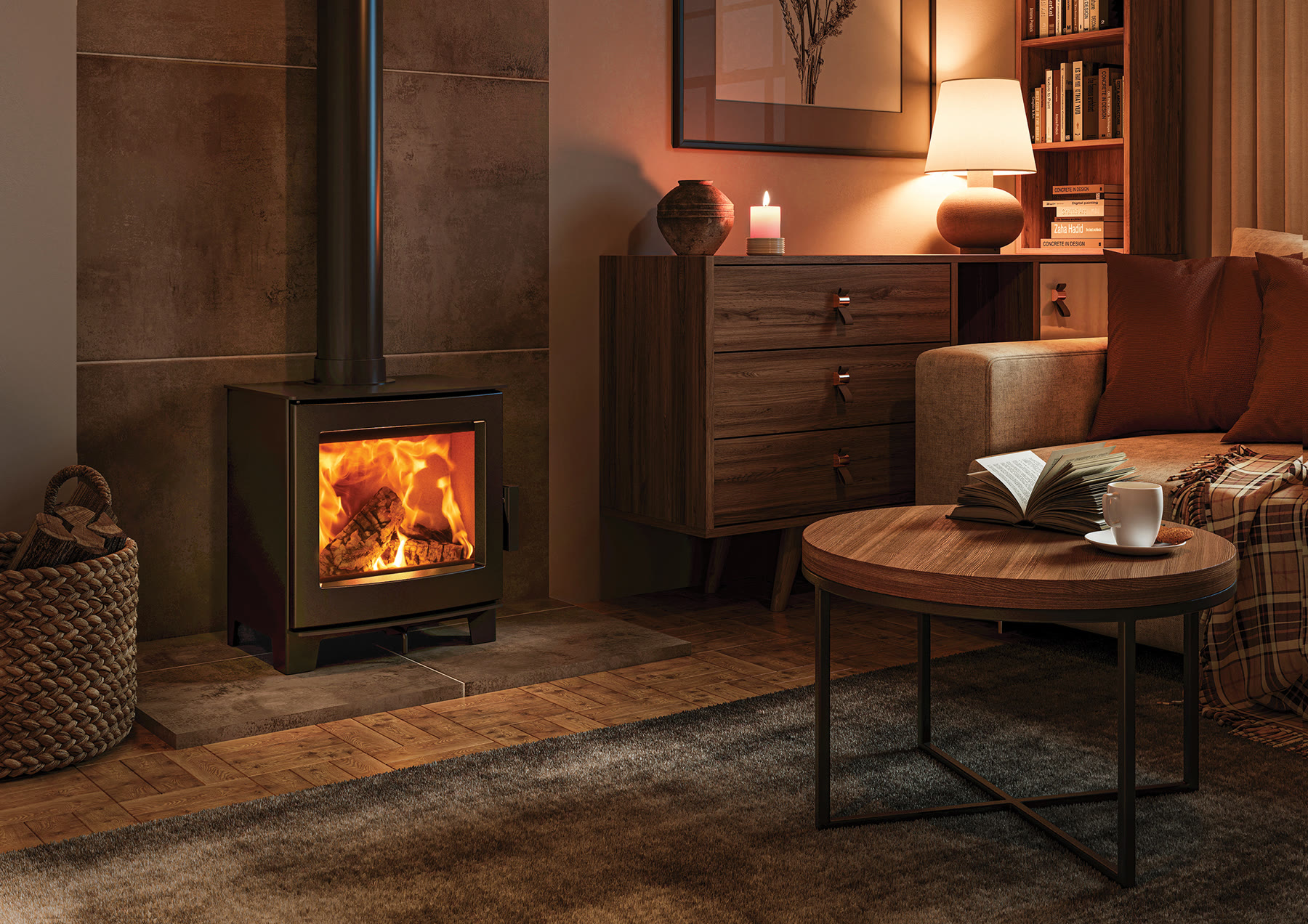
Here is the short version. A wood burning stove vs open fire is not a close contest on heat. A stove gives you roughly three to four times the usable warmth, because it holds the fire behind a closed door with controlled air. An open fire sends most of its heat straight up the chimney.
That is the headline. But the difference shows up in more than the heat, so let us walk through what really changes when you swap one for the other.
Why is a stove so much more efficient than an open fire?
An open fire feels lovely, but it is a poor heater. Most of the warmth it makes goes up the chimney along with a strong draught of your already heated room air. You end up pulling cold air in through gaps in the house to replace it. So the fire is on, and the room can still feel draughty.
A wood burning stove works differently. The fire sits inside a sealed steel or cast iron box with a closed door. You control how much air reaches it, so the wood burns steadily and the metal body radiates heat into the room rather than losing it up the flue. That is where the rough three to four times figure comes from. You burn less wood and feel more heat.
For a Leeds terrace or a village house out towards York, that gap matters through a long Yorkshire winter. Less wood carried in, more warmth kept in the room.
Is a stove cleaner and safer than an open fire?
Yes, on both counts, and this is often what wins people over.
An open fire is open. Sparks can spit onto a hearth or a rug. Ash drifts into the room, and you feel the mess on the mantel and the carpet by the end of the week. Because the fire pulls so much air, it also draws dust around the room.
A stove keeps the fire behind glass. The door stays shut while it burns, so sparks stay put and the ash stays inside the firebox. You clean it out on your terms, not the room’s. The controlled air also means a cleaner burn with less smoke, especially on a modern DEFRA exempt stove burning dry wood.
That last point matters for smoke control rules too. Parts of York already sit inside a smoke control area, and the city is set to go city wide from November 2026. For any address, we check your exact location against the current smoke control rules on the survey, and where it applies we recommend a DEFRA exempt stove burning dry wood under 20 percent moisture or an approved smokeless fuel.
Do people who convert an open fire ever go back?
Honestly, they rarely do. Once a household has felt a proper steady heat from a closed stove, and cleaned up far less ash, the open fire tends to feel like hard work for little reward.
That is not us being salespeople about it. An open fire has a certain romance, and we understand why people love the crackle and the flames. A good stove keeps most of that feeling behind the glass while fixing the heat and the mess. You still get flames to watch. You just get warmth to go with them.
If you are weighing it up, our guide on how to choose a wood burning stove walks through size, style and output so the stove suits your room rather than swamping it.
What does converting an open fire to a stove actually involve?
This is the part people most want to understand before they commit, so here is the plain version.
Converting an open fireplace to a stove usually means three main pieces of work.
First, the chamber. The old open fireplace opening is often bigger than the stove needs, so we prepare the recess, or stove chamber, to suit. That can be a clean rendered finish, brick, or a beam above. Our stove chambers work covers the building and finishing of that space.
Second, the flue. Most conversions need a chimney liner dropped down the existing chimney. The liner gives the stove a correctly sized, sealed route for the flue gases, which helps the stove draw properly and burn cleanly. Whether your chimney needs one depends on its condition and size, and our guide on whether you need a chimney liner explains the usual cases.
Third, the hearth. A stove needs a suitable non combustible hearth beneath it, sized to the rules for your stove. We sort that as part of the install.
Carl and the team handle all three together, so you are not chasing separate trades. As a HETAS registered installer, we self certify the installation, notify Building Control on your behalf, and your certificate of compliance follows. That certificate is worth keeping safe, as it is the paperwork that shows the work was done and signed off correctly, which can matter for your home records and for insurance.
Will a stove suit my house and my chimney?
Most homes across our patch can take a stove, but the right approach depends on your chimney, your room and your hearth. Some chimneys are in great shape and take a liner easily. Others need a little more attention first. A few homes have no usable chimney at all, and there are still options there, which we cover in our guide on a wood burning stove without a chimney.
The only honest way to know is to look. That is what the free home survey is for. We check the chimney, the opening, the hearth and your address against the current smoke control rules, then set out what your conversion needs.
We cover the Leeds to Scarborough corridor, so whether you are in Leeds itself or out towards York, we can come and look properly before anyone talks about work or cost.
FAQ
Is a wood burning stove warmer than an open fire?
Yes, noticeably. A stove typically delivers around three to four times the usable heat of an open fire, because the closed door and controlled air keep the warmth in the room rather than losing it up the chimney.
Do I need a chimney liner to fit a stove in an old fireplace?
Often, yes. Most conversions use a liner to give the stove a correctly sized, sealed flue that draws and burns well. It is not automatic in every case, so we assess your chimney on the survey. Our chimney liner guide explains the common situations.
Can I keep the look of my old fireplace?
Usually yes. We can build the stove into the existing recess and finish the chamber with render, brick or a beam to suit your room. Have a look at our fireplaces and beams work for a sense of the finishes.
Is a wood burning stove cleaner than an open fire?
Much cleaner. The closed door keeps ash and sparks inside the firebox, so there is far less mess in the room. Burning dry wood on a DEFRA exempt stove also produces less smoke.
Will a stove help with smoke control rules in York?
It can. In smoke control areas we recommend a DEFRA exempt stove burning dry wood under 20 percent moisture or approved smokeless fuel. Parts of York are covered today, with the city going city wide from November 2026. We check your exact address on the survey.
How much does it cost to convert an open fire to a stove?
It depends on the chamber, the liner and the hearth your home needs. We do not quote blind. You get one clear written quote after the free home survey, and our installation cost guide explains what shapes the figure.
Book your free home survey
If you are ready to see what a stove could do for your room, the next step is simple. Carl and the team will come and look at your fireplace, chimney and hearth, check your address against the current smoke control rules, and talk through your options with no pressure. You then get one clear written quote.
Book your free home survey and we will take it from there.
Thinking about a stove or fireplace?
Book a free home survey and we will give you honest advice and one clear written quote, with no obligation.
Request a free home surveyMore field notes
Read next
Why does my wood burning stove glass go black?
Black stove glass usually comes down to wet wood, burning too low, or shut air controls. Here is why it happens and how to keep the glass clear.
Read the noteSeasoned vs kiln dried firewood: which should you burn?
Both can be fine if the wood is genuinely dry, under 20 percent moisture. Kiln dried is reliably ready now, seasoned is cheaper if stored well. Wet wood is the real enemy.
Read the noteChimney Fire Safety Week 2026: seven checks before winter
Chimney Fire Safety Week runs from 7 to 13 September 2026. Use these seven practical checks to prepare your stove and chimney for safer winter use.
Read the note