Inspect the chimney and fireplace
The survey looks at the existing flue route, chimney height, fireplace opening, pot, access and any signs of tar, damp, damage or poor draw. If the chimney has been unused for years, this stage matters even more.
 Over 35yrs trusted service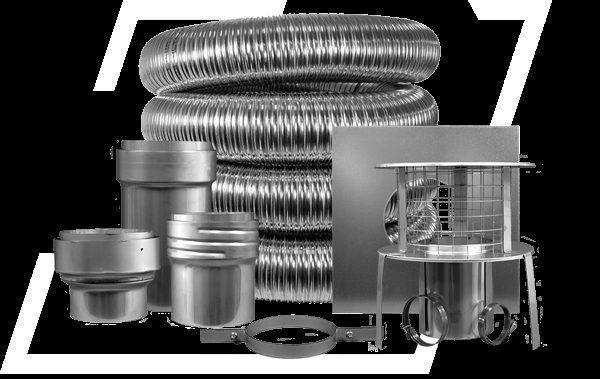
Leeds chimney liners
The liner is the part of a Leeds stove installation you rarely see, but it is often the part that decides whether the stove lights easily, burns cleanly and can be swept safely.
Carl Finnell fits chimney liners and twin-wall flue systems for wood burning stove installations across Leeds. This page is for the flue question specifically: when an old chimney needs lining, when 316 or 904 grade makes sense, what relining involves and when a chimney-free home needs a twin-wall system instead.
Leeds has a lot of chimney variety. A Victorian terrace in Headingley, a stone villa in Roundhay and a newer house in Moortown can all end up with a stove, but the flue design behind each one is different. The survey decides the route, diameter, grade and terminal before the installation is quoted.
Process
A liner should never be guessed from the outside. It has to match the appliance, the chimney and the way the stove will be used.
The survey looks at the existing flue route, chimney height, fireplace opening, pot, access and any signs of tar, damp, damage or poor draw. If the chimney has been unused for years, this stage matters even more.
The liner diameter follows the stove and manufacturer requirements. For most wood-burning use, 316 stainless steel is the common choice. For heavier use, mixed smokeless fuel or more acidic conditions, 904 grade may be the better long-term specification.
The liner is installed through the chimney, connected to the stove pipe, secured at the top with the correct terminal or cowl and sealed at the fireplace opening with the right closure or register plate. The aim is a continuous, sweepable route.
Once connected, the stove is smoke-tested and commissioned. Where the liner is part of a HETAS stove installation, the finished job is notified and certified for your records.
Leeds specifics
Many Leeds terraces have original chimneys that were built for open fires, not modern stoves. They are often too large, rough internally or altered where fireplaces have been changed over time. A liner gives the stove a consistent flue size, improves draw and makes sweeping easier.
Older north Leeds properties can have taller stacks, larger rooms and more exposed rooflines. That can be good for draw, but it can also mean downdraught, cold flues or awkward terminal choices depending on the house. Cowls and terminal height are specified after the survey, not copied from the last job.
Relining is different from a first-time liner. If a previous liner has failed, the old route, appliance history and fuel use need understanding. A daily-use stove or multi-fuel pattern may justify a harder-wearing 904 liner, while an occasional wood-only stove may not need that extra spend.
Where there is no chimney, a twin-wall insulated flue replaces the masonry flue altogether. In Leeds this is common on newer estates, extensions and garden-room style spaces. The route can be internal or external, but it must maintain safe clearances, reach the right height and look acceptable on the building.
Cost guidance
The main cost variables are chimney height, access, liner diameter, liner grade, terminal or cowl choice, fireplace connection and whether scaffolding or unusual access is needed. A simple two-storey terrace is not the same as a taller villa or a difficult roofline.
The honest quote should say whether it includes sweeping, the liner, adapter, register or closure plate, cowl, labour, testing and certification where part of the stove installation. If the chimney does not need lining, we will say that too, but in older Leeds homes a liner is commonly the safest and most reliable route.
A complete log burner quote should show the visible finish and the hidden safety work, so you can compare finished installations rather than partial prices.
Best fit
A sensible choice for many wood-burning installations where the stove is used normally and swept properly.
Read moreBetter suited where the stove works hard, runs often or uses smokeless fuel as well as wood.
Read moreThe answer for Leeds homes with no chimney, subject to a route that is safe, practical and acceptable visually.
Read moreProof nearby
Case study
The Menston case study shows a compact stove installation near Leeds where the flue, room size and appliance choice had to be treated as one working system.
Read the case study →Useful next pages

HETAS Registration Number 2087
HETAS registered
Carl self-certifies every installation and notifies Building Control on your behalf, so the work is signed off properly and your certificate of compliance is issued for your records.
Leeds questions
The survey checks the chimney condition, size, route and draw. Many older Leeds chimneys are oversized or rough internally, so lining is often recommended, but it should be confirmed by inspection.
316 is the usual choice for many wood-burning stoves. 904 costs more but is more resistant to acidic condensates and heavy use, so it can be better where the stove runs daily or burns smokeless fuel as well as wood.
Yes, where the old liner can be safely removed and the chimney is suitable. We check why the old liner failed before specifying the replacement, because fuel use, moisture and maintenance all matter.
A twin-wall insulated flue can often be fitted instead. The survey checks whether an internal or external route is practical, how it clears the roof and how it will look on the property.
The liner helps the stove draw and burn correctly, but smoke-control compliance comes from using the right fuel and an exempt appliance where required. In Leeds, both points are checked together.
Your enquiry
Our home survey expert will review your details and email you about the next steps.
HETAS-registered installs. We cover Leeds, Harrogate, Wetherby, York, Ripon, Malton, Thirsk and Scarborough.
Not ready for a survey? Call or email us →