Carl Finnell installs wood burning and multi-fuel stoves across Leeds, from inner-city terraces and back-to-backs to larger north Leeds homes around Roundhay, Adel and Alwoodley. This page is the deeper installation guide for Leeds customers: what the survey checks, what the fit includes, how the HETAS paperwork is handled and where the city itself changes the specification.
The broad Leeds area page explains the full local service. This page is narrower. It is about the actual installation decision: whether the chimney needs lining, whether the stove has the right DEFRA exemption, how the hearth and chamber are built, what happens on fitting day and how the finished job is signed off.
Process
How a Leeds stove installation works
The work is planned before a tool comes out. That matters in Leeds because two houses on the same street can have very different chimneys, especially where fireplaces have been boarded, narrowed, opened and patched over decades.
01Home survey and smoke-control check
The survey confirms the room size, chimney condition, fireplace opening, hearth position, ventilation and the route for the flue. Most of Leeds is smoke controlled, so we also check whether the address sits in a controlled area and specify a DEFRA-exempt appliance where wood burning is required.
02Stove, liner and fireplace specification
Once the room and chimney are understood, the stove can be sized properly. Many Leeds terraces need a correctly sized flexible liner because the original chimney is too large or rough inside for a modern stove. Larger rooms may need a different output, chamber finish or hearth size rather than just a bigger appliance.
03Written quote with the full job included
The quote sets out the stove, liner or twin-wall flue, hearth, chamber work, register plate, cowl, labour, commissioning and HETAS notification. If a fireplace has to be opened, made good or rebuilt around the stove, that is priced as part of one job, not left as a surprise.
04Installation, testing and clean handover
On the day, the chimney is prepared, the stove and flue are fitted, the appliance is draw-tested and the room is left ready to use. The work is then notified through HETAS so the compliance certificate follows for your records and home insurance.
Leeds specifics
What changes from one Leeds home to another
In Headingley, Chapel Allerton, Meanwood and other Victorian or Edwardian streets, the most common issue is the old chimney. The flue may be oversized, unlined or full of rough changes where fireplaces have been altered over the years. A modern stove needs a stable draw, so the liner is often what makes the installation easy to light, easy to sweep and safe to live with.
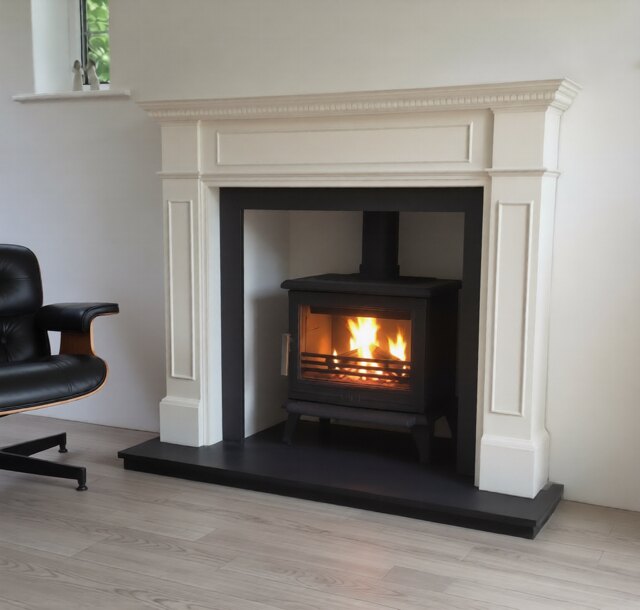
North Leeds homes around Roundhay, Adel, Alwoodley and Moortown often have more generous rooms and more ambitious fireplace briefs. The stove still has to be sized by the volume of the space, but the finish matters too: a chamber that suits the ceiling height, a hearth cut to the proportions of the room and a beam or surround that looks built in, not added later.
Newer Leeds homes without a masonry chimney are a different conversation. A twin-wall insulated flue can make a real stove possible, either internally or externally, but the route, terminal height and visible finish need thinking through. In some TV-led family rooms, a media wall electric fire may be the better answer, and we will say so if that is the honest fit.
Leeds smoke-control rules are part of the specification. Leeds City Council says most of Leeds is a smoke control area, and GOV.UK guidance says wood can only be burned in an exempt appliance in those areas. In practice that means choosing an Ecodesign, DEFRA-exempt stove and burning the fuel the manufacturer allows.