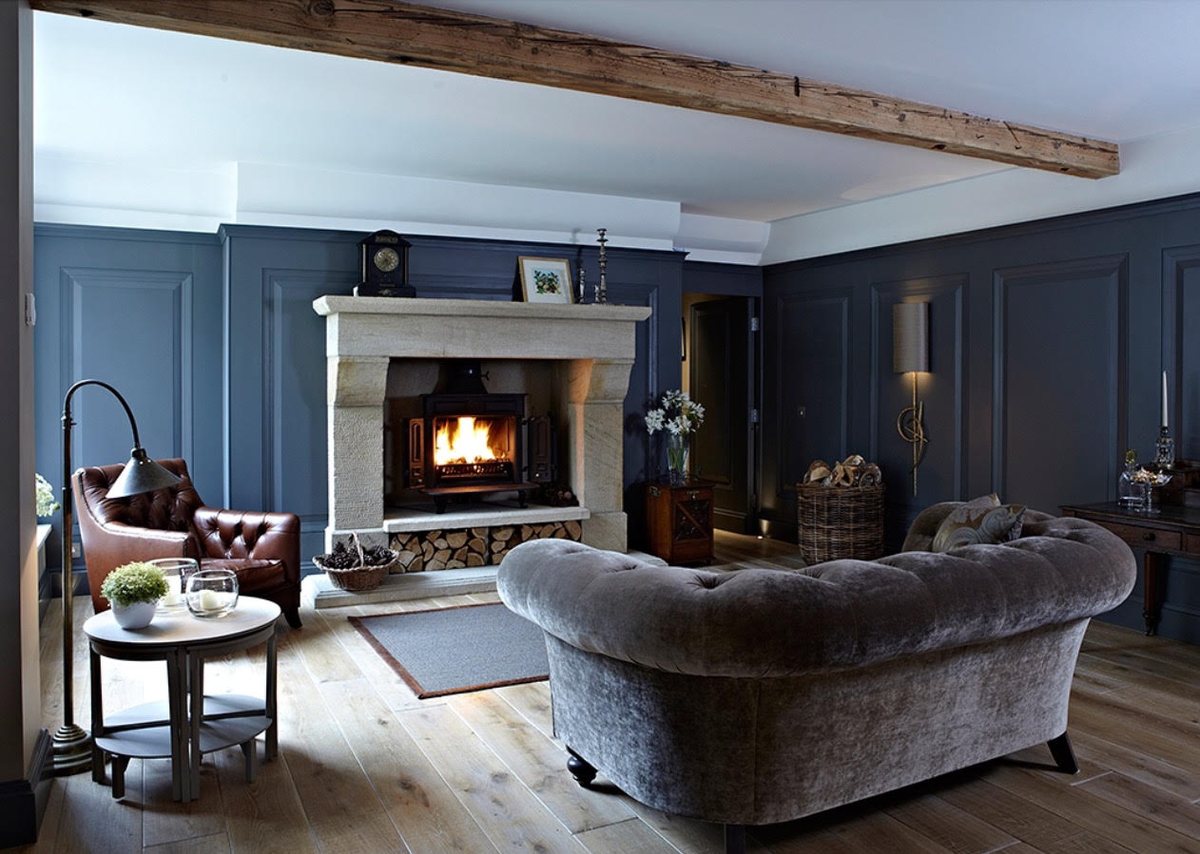
Carl Finnell fits fireplaces across Leeds where the brief is more than putting a surround against a wall. Older homes often need the opening made safe, the chimney checked, the chamber formed and the hearth cut before the surround or beam can look right. Newer homes may need a completely formed feature, or a fireplace designed around an electric fire where there is no chimney.
This page focuses on fireplace installation in Leeds specifically: the building and finishing work around the fire. The parent fireplace page covers the wider range; the Leeds area page covers the city as a whole. Here the detail is what happens to the room, the chimney breast and the materials.
Process
How a Leeds fireplace installation is planned
A fireplace is part joinery, part masonry, part stove installation and part interior finish. The survey joins those pieces together before the job is quoted.
01Survey the opening and chimney
We check whether the fireplace is open, boarded, narrowed or previously altered. In many Leeds terraces and villas the visible fireplace tells only part of the story, so the survey looks at the chimney breast, hearth position, lintel, flue route and what making good will be needed.
02Choose the fireplace structure
The room decides whether a timber surround, natural stone fireplace, simple beam, brick chamber or porcelain finish will sit best. Material samples matter in Leeds homes because stone, brick, plaster colour and daylight can change the whole feel of the finished fireplace.
03Build the opening and hearth properly
Where a stove is included, the fireplace must meet the appliance clearances and hearth requirements. The hearth is cut and fitted to protect the floor and suit the room, and the chamber is formed so it looks intentional rather than patched around the stove.
04Finish, make good and sign off
The difference between a fitted fireplace and a finished fireplace is the last ten percent: neat plastering, clean edges, the right beam height and a room left ready to decorate or use. If there is a stove, the HETAS sign-off is handled as part of the installation.
Leeds specifics
Leeds fireplace work by property type
In inner Leeds terraces and back-to-backs, fireplaces have often been bricked up, boarded over or reduced for an old gas fire. Restoring them for a stove usually means opening back to a sensible size, installing a lintel where needed, forming a chamber and making sure the chimney is lined or otherwise fit for purpose.
Victorian and Edwardian homes in Headingley, Chapel Allerton and Roundhay can take a more substantial surround, but they still need restraint. A fireplace that is too large will dominate the room, while a surround that is too small can look like a catalogue part. The survey measures the room and opening so the finished proportions feel settled.
North Leeds villas in Adel, Alwoodley and Moortown often ask for higher-spec materials: oak surrounds, stone beams, limestone, granite hearths or chamber finishes with more texture. The important part is not making everything grand; it is choosing materials that belong with the house and are safe around the appliance.
Conservation-area streets and older properties need careful external decisions too. Most fireplace work is internal, but if the project needs a new visible flue route or a change at the chimney terminal, it is worth checking before assumptions are made. We flag those issues during the survey rather than burying them in the quote.