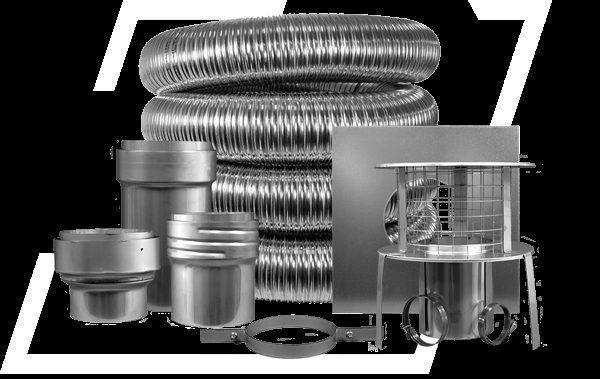
Flexible stainless steel chimney liner and flue components for a wood burning stove installation

Harrogate chimney liners

Chimney liner installation in Harrogate

Harrogate chimney liner work is often about bringing a large original flue back into service for a modern stove, with the right diameter, grade and terminal for the house.

Carl Finnell fits chimney liners and twin-wall flues for stove installations across Harrogate and the surrounding villages. This page focuses on the flue system: when an older chimney needs lining, how 316 and 904 grades are chosen, what relining involves and when a chimney-free extension or garden room needs twin-wall instead.

The Harrogate area page explains the wider local service; this is the technical companion for the chimney. In Harrogate, the flue often has to serve a high-ceilinged room, a tall stack, a period fireplace or a renovation where the fire is being designed in with other trades.

Process

How we assess a Harrogate chimney

The liner is specified after inspection, not from a postcode. The height, condition, route and intended stove use all matter.

01

Inspect the route and existing opening

The survey checks chimney height, pot, access, fireplace opening, signs of tar or damp, previous alterations and whether the flue has been used recently. Large old flues often need lining even where the stack looks sound from outside.

02

Choose liner size and grade

The liner diameter follows the stove and manufacturer requirements. A 316 liner is the usual choice for many wood-burning stoves. A 904 liner can be a better long-term fit where the stove runs daily, the chimney is exposed or smokeless fuel may be used.

03

Fit the liner and terminal

The liner is installed through the chimney, connected to the stove pipe, secured at the top and finished with the correct cowl or terminal. In exposed Harrogate and village settings, terminal choice can affect both draw and weather performance.

04

Test the draw and certify the installation

Once connected, the system is smoke-tested and commissioned. Where the liner is part of a HETAS stove installation, the notification and certificate are handled with the completed job.

Harrogate specifics

Lining Harrogate chimneys properly

Victorian and Edwardian Harrogate homes often have large original chimneys built for open fires. A modern stove needs a smaller, smoother and warmer flue path. Without a liner, the draw can be lazy, soot can collect in the wrong places and sweeping can be less reliable.

Taller townhouses and villas around the Stray, Duchy estate and Harlow Hill can draw well, but they can also expose weaknesses: cold flues, downdraught, awkward terminals or old parging that has broken down inside. The survey decides whether the answer is a standard liner, a different terminal or a higher-grade specification.

For Pannal, Burn Bridge, Beckwithshaw and Killinghall homes, use pattern matters. If the stove is for occasional evening use, the liner decision may be straightforward. If the stove is expected to work hard through winter in a stone house or renovation, 904 grade may be worth discussing because it resists harsher conditions better.

Some Harrogate projects have no usable chimney at all: extensions, garden rooms and contemporary renovations. In those cases a twin-wall insulated flue can be designed through the building or externally, with firestops, supports, weathering and terminal height planned around both safety and appearance.

Cost guidance

What affects chimney liner cost in Harrogate

The cost depends on chimney height, roof access, liner grade, liner diameter, cowl or terminal, fireplace connection and whether the chimney needs extra preparation. A straightforward liner in a two-storey house is not the same as a tall period stack or an exposed village property.

The quote should include the liner, connectors, register or closure plate, cowl, labour, testing and certification where part of the stove installation. If the right answer is twin-wall rather than a liner, the quote should show the route and components clearly so the visual and cost implications are understood.

Best fit

Common Harrogate flue choices

316 stainless liner

A practical option for many wood-burning stoves where the use is normal and the chimney is suitable.

Read more

904 stainless liner

Worth considering for harder use, mixed fuel patterns or exposed chimneys where long-term resilience matters.

Read more

Twin-wall flue systems

The route for garden rooms, extensions and homes without a usable chimney, designed around the building.

Read more

Proof nearby

A real Harrogate-area installation

Case study

Three-sided stove, Harrogate garden room

This Harrogate installation is useful for flue planning because the stove was designed into a garden-room setting where the fire, hearth and surrounding construction had to work together.

Read the case study →

Useful next pages

Plan the rest of the Harrogate job

HETAS registered

Installed with care, certified with confidence

Carl self-certifies every installation and notifies Building Control on your behalf, so the work is signed off properly and your certificate of compliance is issued for your records.

Verify Carl's HETAS registration

Harrogate questions

Harrogate chimney liner FAQs

Do Harrogate period chimneys usually need lining?

Often, yes. Many were built for open fires and are too large or rough internally for a modern stove. The survey confirms the condition, size and route before a liner is specified.

When would you use a 904 liner in Harrogate?

A 904 liner may be sensible where the stove will run hard, the chimney is exposed, or smokeless fuel may be used as well as wood. It costs more, so it should be recommended for a reason.

Can a chimney liner be fitted in a conservation-area home?

Usually, because the work is inside the chimney. The visible terminal or cowl still needs to be chosen with care, and anything unusual should be checked before work starts.

Can you install a stove flue in a Harrogate home with no chimney?

Yes, if a safe twin-wall route is available. The flue can sometimes run internally or up an outside wall, but the route, clearances and appearance all need surveying.

Does the liner make a stove legal in a smoke control area?

No. A liner helps the stove draw and burn correctly, but smoke-control compliance depends on using authorised fuel or an exempt appliance where required. We check both during the survey.

Book your free home survey

Tell us where you are and what you are thinking

Send a few details and we will call to arrange a visit, bring samples and give you a proper quote. No pressure and no obligation.

HETAS-registered installs. We cover Leeds, Harrogate, Wetherby, York, Ripon, Malton, Thirsk and Scarborough.

Not ready for a survey? Ask us to call you back first →