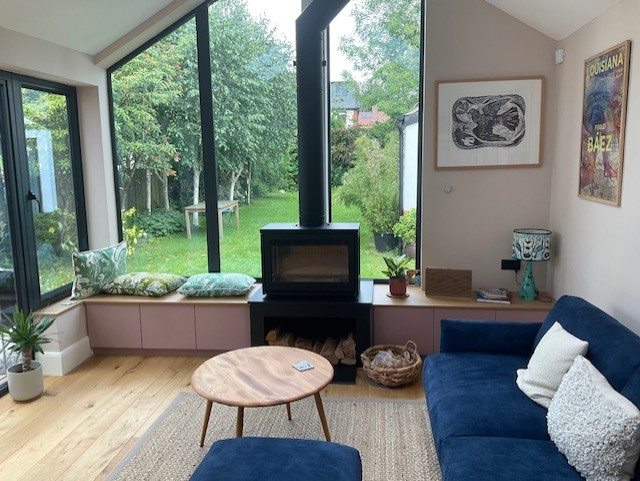
Carl Finnell installs wood burning and multi-fuel stoves across Harrogate, from Victorian and Edwardian spa-town houses around the Stray, Duchy estate and Harlow Hill to village homes in Pannal, Killinghall, Beckwithshaw and Burn Bridge. This page is for the installation detail: what the survey checks, how the stove and flue are specified, what the quote should include and how the job is certified.
The Harrogate area page gives the broader local overview. This page is narrower and more practical. It explains how a stove installation is put together in a Harrogate property where the chimney may be large, the room may be high-ceilinged, the fireplace may be worth restoring and the visible flue or terminal may need a more sympathetic decision.
Process
How a Harrogate stove installation works
Harrogate jobs reward careful survey work. A stove that is perfect in a small modern room can be wrong for a high-ceilinged drawing room, and an original chimney can look sound while still needing a properly sized liner.
01Survey the room, chimney and address
The survey checks the room volume, fireplace opening, chimney route, hearth position, ventilation, roofline and whether the address sits inside a smoke control area. North Yorkshire Council says smoke control areas cover the majority of Harrogate, so we check the property and specify a DEFRA-exempt appliance where wood burning requires one.
02Specify the stove and flue together
The stove output, flue size and chimney liner are chosen as one system. Harrogate villas and townhouses often have large original flues that need lining before a modern stove will draw cleanly. Garden rooms, extensions and some village homes may need a twin-wall flue instead.
03Quote the full installation
The written quote sets out the appliance, liner or twin-wall route, hearth, chamber or making-good work, cowl, labour, commissioning and HETAS notification. Where the fireplace is part of the brief, the chamber, surround and hearth are included in the same joined-up specification.
04Fit, test and certify
The installation is carried out, smoke-tested and commissioned before handover. As a HETAS-registered installer, Carl notifies the work after completion so the certificate follows for your records and insurance.
Harrogate specifics
What changes in Harrogate homes
Around the Stray, Duchy estate and Harlow Hill, many homes have generous rooms, tall ceilings and original chimney breasts. The common mistake is choosing by nominal stove size rather than by the volume and heat loss of the room. A stove has to be large enough to warm the space but not so large that it is run shut down and burning poorly.
Victorian and Edwardian fireplaces in central Harrogate are often worth saving. Where the surround or opening has period value, the installation needs to respect it: the hearth, chamber, liner and stove pipe should support the original character rather than turn the fireplace into a modern hole in an old wall.
Harrogate conservation areas make external decisions more sensitive. Internal stove and liner work is usually straightforward, but an external twin-wall flue, a visible terminal change or an unusual roofline needs proper thought. We do not make planning promises; we flag anything that may need checking before the route is agreed.
The villages around Harrogate change the brief again. Pannal and Burn Bridge include period houses and renovation projects where the fire can be designed in properly. Killinghall and Beckwithshaw bring stone homes, exposed positions and chimneys that may need harder-working liner specifications if the stove is expected to run daily in winter.